2 min read
Topic 4: Iceberg Orders (The Introduction)
Summary of Key Concepts
What Are Iceberg Orders
- Large orders that don't show their true size
- Example: A trader buys 200 lots but shows only 20 at a time
- When first 20 lots fill, next 20 open immediately
- Used by institutions to hide their market activities
- Also used by retail traders (e.g., 6 lots shown as 1)
How to Detect Icebergs
- Must look at the order book (bid/ask)
- When you buy the offer but it keeps refreshing the quantity without breaking the level = iceberg
- Icebergs holding market up or down are usually at psychological levels
- Volume continues to refresh at certain amounts
What Happens When Icebergs Are Exhausted
- If icebergs are finally out → market can break out very quickly in that direction
- An iceberg can serve as a form of ABSORPTION (price absorbed by traders)
- An iceberg might stop a pullback BUT most likely won't stop a TREND
- With a trend: aggressive participants come in and take out levels
Relevance Assessment
- Icebergs in the middle of a range may be irrelevant (could be hedge trades)
- Icebergs at key levels (support/resistance, psychological numbers) = significant
- Finding iceberg orders is "overrated" — too common to add trading value alone
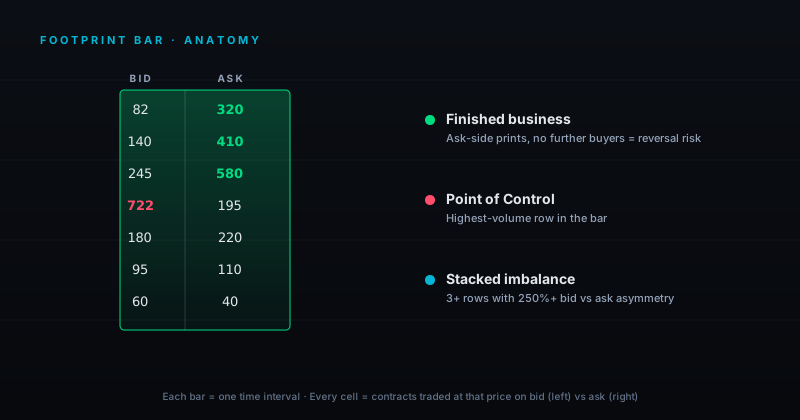
- The traded volume from filled icebergs WILL show up in the order flow chart
- The only way to see what institutional traders are doing = watch Order Flow
Image
Key Takeaway for Bot
- Don't try to detect icebergs directly — focus on the RESULT (filled volume in footprint)
- When large volume appears at a level that keeps refreshing = institutional absorption
- This shows up as big contract numbers on the footprint = what our gold bot reads